
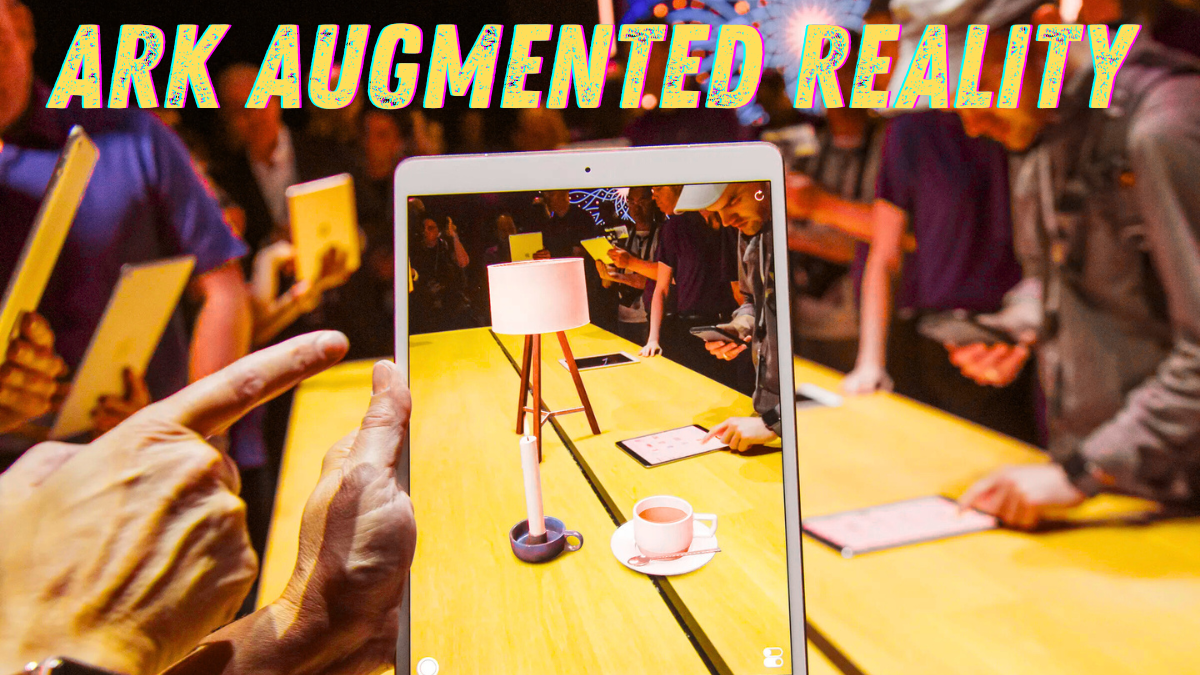
Ark Augmented Reality is revolutionizing the way people interact with digital and physical environments. By blending artificial intelligence, computer vision, and real-time scene rendering, Ark Augmented Reality creates immersive experiences that feel both intelligent and lifelike. Unlike traditional augmented reality, Ark Augmented Reality layers interactive digital content in a way that responds to user actions and environmental context, making it ideal for gaming, education, marketing, and professional applications.
The popularity of Ark Augmented Reality is growing due to its ability to provide personalized, interactive experiences. Businesses are adopting it for marketing campaigns and product demonstrations, while educators use it to make learning more engaging. Its combination of advanced AI algorithms and cloud computing allows for seamless 2D and 3D object placement, offering a richer user experience than many conventional AR platforms currently available.
What Ark Augmented Reality Means
Ark Augmented Reality refers to a sophisticated AR framework that uses knowledge-driven AI to create interactive and intelligent digital overlays on real world environments. This system allows digital objects to adapt dynamically to surroundings and user interactions, providing more meaningful and engaging experiences. Unlike standard AR systems, Ark Augmented Reality integrates contextual understanding, allowing users to interact with virtual objects in a logical and immersive way.
This technology is especially effective in applications requiring intelligent scene generation or object interaction. Ark Augmented Reality goes beyond mere visual overlays by understanding spatial relationships, object recognition, and user behavior. It is designed to create experiences that feel natural and responsive, making it a preferred choice for developers, enterprises, and creative industries aiming for high-quality AR solutions.
How Ark Augmented Reality Works
Ark Augmented Reality works by combining AI, computer vision, sensors, and cloud processing. Cameras capture the real-world environment, while AI algorithms analyze objects, surfaces, and user interactions. This ensures that digital content is placed accurately and interacts realistically with the environment, creating a seamless blend between real and virtual worlds.
Cloud processing plays a critical role in Ark Augmented Reality by handling large scale computations and rendering 3D scenes in real-time. By offloading intensive processing to the cloud, devices such as smartphones and AR glasses can run smooth, high-quality AR experiences without performance lags. This integration of local computation and cloud intelligence is one of the key reasons why Ark Augmented Reality offers superior interactivity and realism.
Key Features of Ark Augmented Reality
One of the main features of Ark Augmented Reality is its interactive 2D and 3D object generation. Digital objects can respond to gestures, voice commands, and environmental changes, creating a highly immersive experience. Knowledge enhanced AR layers ensure objects behave logically within the scene, providing more intuitive and meaningful interactions for users.
Ark Augmented Reality also supports multi-device compatibility, allowing seamless experiences across smartphones, tablets, and AR glasses. High-quality visuals, real-time scene adaptation, and customizable digital overlays make it suitable for a wide range of applications, from entertainment and education to healthcare and retail. This versatility positions Ark Augmented Reality as a leading technology in the AR market.
Ark Augmented Reality vs Other AR Platforms
Compared to traditional platforms like ARKit or ARCore, Ark Augmented Reality provides a more intelligent and context-aware experience. While ARKit and ARCore focus primarily on visual tracking and object placement, Ark Augmented Reality adds AI-driven understanding, making interactions more dynamic and responsive. Developers can create complex, adaptive scenes that adjust based on user actions and environment changes.
This difference makes Ark Augmented Reality ideal for applications such as immersive gaming, educational simulations, and enterprise solutions. Where ARKit or ARCore might be sufficient for simple object overlays, Ark Augmented Reality delivers a richer, more engaging experience that enhances interactivity, user engagement, and overall satisfaction.
Uses of Ark Augmented Reality
Ark Augmented Reality has a wide variety of real-world applications. In gaming, it turns ordinary spaces into interactive playgrounds where players can manipulate objects, engage with characters, and experience immersive storytelling. Educational institutions leverage Ark Augmented Reality to create interactive 3D models and virtual experiments, making learning more engaging and effective.
Retail and marketing industries use Ark Augmented Reality for virtual try-ons, product demonstrations, and immersive shopping experiences. Healthcare professionals employ it to visualize complex medical procedures or simulate surgeries for training purposes. Other industries, including architecture, tourism, and industrial training, also benefit from the flexibility and interactivity offered by Ark Augmented Reality.
Benefits of Ark Augmented Reality
Ark Augmented Reality delivers significant benefits to both users and businesses. For users, the technology provides highly immersive, interactive, and personalized experiences. Digital content reacts intelligently to user inputs, making applications feel more engaging and realistic. For businesses, this translates into higher user engagement, better learning outcomes, and increased conversions for marketing campaigns.
Ark Augmented Reality also simplifies the creation of AR content. Developers can generate and edit 2D/3D scenes efficiently, reducing development time and resources. Its combination of AI, cloud processing, and multi-device support ensures reliable and smooth performance across a variety of environments, enhancing both user experience and content creation workflows.
Challenges and Limitations of Ark Augmented Reality
Despite its benefits, Ark Augmented Reality faces several challenges. High-performance devices and sensors are often required, which can limit accessibility for some users. Battery consumption can also be significant during prolonged use, and cloud reliance may introduce latency in certain situations.
Privacy and security concerns are another consideration, as continuous scanning of environments may raise data protection issues. Developers must also ensure that AR content is safe, contextually appropriate, and accessible. Understanding these challenges is crucial for effectively implementing Ark Augmented Reality in both commercial and educational applications.
Future Potential of Ark Augmented Reality
The future of Ark Augmented Reality looks extremely promising. As AR glasses, wearable devices, and AI continue to improve, experiences will become even more personalized, interactive, and realistic. Hyper-contextual AR content and seamless metaverse integration are expected to redefine how users interact with digital environments.
Industries such as healthcare, retail, education, and entertainment will continue adopting Ark Augmented Reality at scale. Its ability to combine intelligent AI-driven interactions with immersive visuals ensures it will play a key role in shaping the next generation of AR applications, offering users experiences that feel both innovative and natural.
Conclusion
Ark Augmented Reality is transforming the way digital and physical worlds merge. By leveraging AI, knowledge-driven interactions, and high-quality visual overlays, it provides immersive experiences for users and businesses alike. Its growing adoption across gaming, education, healthcare, and retail underscores its potential to shape how we interact with technology in the future.
From interactive learning to enterprise solutions and entertainment, it offers a platform for innovation that combines intelligence, realism, and engagement. The future of augmented reality is bright, and Ark Augmented Reality is leading the way.