
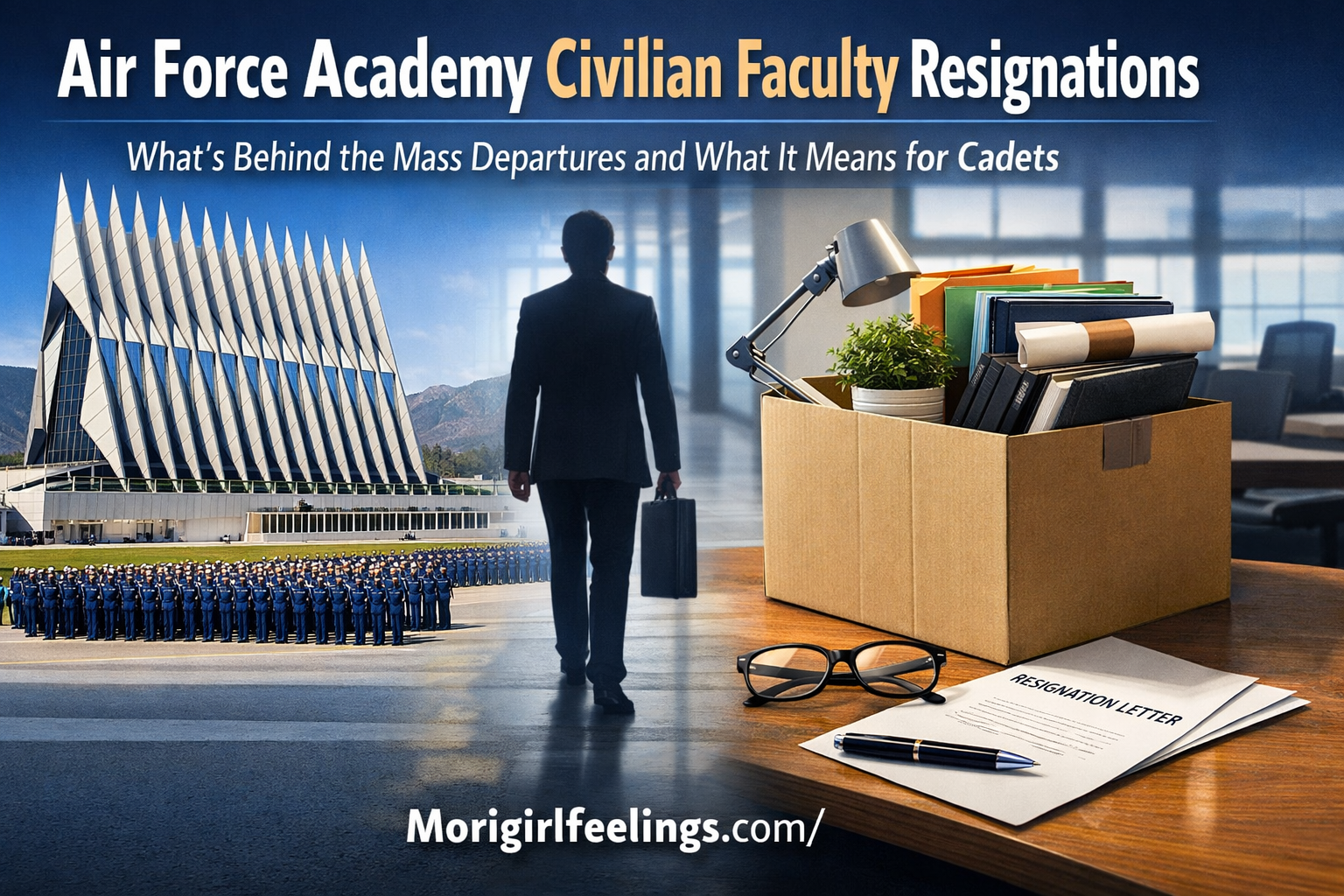
The Air Force Academy Civilian Faculty Resignations have drawn significant attention in recent months, raising concerns about the stability of academic programs and the future of cadet education. Over 50 professors and instructors have voluntarily departed or retired, representing a substantial portion of the Academy’s civilian workforce. These resignations come amid broader federal workforce reduction efforts, budgetary constraints, and internal programs encouraging early retirement.
The departures highlight the critical role that civilian faculty play in maintaining educational standards, providing continuity in specialized courses, and mentoring cadets. Some resignations were expected; the scale raises questions about the Academy ability to sustain its rigorous academic programmes.The Air Force Academy Civilian Faculty Resignations reflect staffing challenges and spark discussions on accreditation and long-term educational quality.
The departures highlight the critical role that civilian faculty play in maintaining educational standards, providing continuity in specialized courses, and mentoring cadets. Some of the resignations were expected, but the scale raises questions about the Academy’s ability to sustain its rigorous academic programmes. The Air Force Academy Civilian Faculty Resignations reflect staffing challenges and spark discussions on accreditation and long-term educational quality.
Background of the Air Force Academy Civilian Faculty
Civilian faculty at the Air Force Academy provide expertise in fields ranging from engineering and sciences to humanities and social sciences. These instructors complement military staff, bringing specialized knowledge and academic rigor that shapes the cadet experience. Historically, the Academy has maintained a balance between civilian and military faculty to ensure both operational and scholarly excellence.
The importance of civilian faculty extends beyond teaching. They play key roles in research, curriculum development, and cadet mentoring. The Air Force Academy Civilian Faculty Resignations disrupt this balance, potentially impacting both the quality of instruction and the mentorship opportunities available to cadets. Retaining skilled civilians is essential for maintaining the Academy’s educational reputation.
Timeline and Scope of the Resignations
The recent wave of Air Force Academy Civilian Faculty Resignations began early in 2025, with over 50 instructors voluntarily leaving their positions. Reports indicate that approximately 25 faculty members resigned, while additional staff either retired or were non-renewed. Internal estimates suggest that the number of civilian departures could exceed 100 by the end of the fiscal year.
These resignations are part of a broader initiative to reduce the federal civilian workforce, alongside voluntary programs like deferred resignation incentives. The timing of the departures has created challenges for continuity in certain academic programs, prompting discussions among administrators and stakeholders about mitigation strategies and the Academy’s ability to maintain its educational standards.
Causes and Contributing Factors
Several factors contribute to the wave of Air Force Academy Civilian Faculty Resignations. Budgetary constraints have forced the Academy to evaluate civilian staffing levels, with nearly 10 percent of positions identified for elimination. Additionally, programs encouraging voluntary departures or early retirement have incentivized faculty to leave, accelerating the reduction of civilian staff.
Beyond financial and programmatic considerations, some resignations reflect concerns over workplace transparency and policy changes. Faculty members have cited uncertainty about administrative decisions and fears about the impact of staff cuts on academic programs. These departures underscore the complexity of maintaining morale and retaining top talent in a challenging institutional environment.
Impacts on the Academy
The mass resignations have several immediate and long-term impacts on the Air Force Academy. Academic programs are facing disruptions as courses lose experienced instructors, potentially affecting cadets’ learning outcomes. Certain specialized subjects may experience temporary gaps, with military staff or reserve personnel stepping in to fill instructional roles.
Accreditation concerns have emerged in response to the Air Force Academy Civilian Faculty Resignations. Maintaining accreditation requires stable staffing, robust academic offerings, and consistent programme quality. The Academy has reassured stakeholders that academic standards will remain intact, but the loss of experienced civilian faculty raises questions about the sustainability of current educational practices.
Leadership Response and Future Outlook
The Air Force Academy leadership has responded to the resignations by emphasizing plans to maintain academic quality and integrate military staff into teaching roles. Superintendent Tony Bauernfeind highlighted that these measures are part of broader Air Force-wide initiatives and that the Academy remains committed to delivering a rigorous educational experience for cadets.
Looking forward, the Academy aims to replace departing faculty strategically, ensuring that critical programs are staffed and that cadets continue to receive high-quality instruction. Efforts to improve communication, maintain morale, and recruit qualified replacements are expected to shape the institution’s stability over the next several years. The Air Force Academy Civilian Faculty Resignations, while challenging, present an opportunity to reassess staffing strategies and strengthen the institution’s resilience.
Conclusion
The Air Force Academy Civilian Faculty Resignations have highlighted the delicate balance between budgetary pressures, workforce management, and academic quality. With over 50 professors leaving amid concerns over accreditation, the Academy faces both challenges and opportunities. Maintaining educational excellence will require strategic staffing, effective leadership, and a continued focus on cadet success. Monitoring these developments is essential for understanding the Academy’s academic future.