
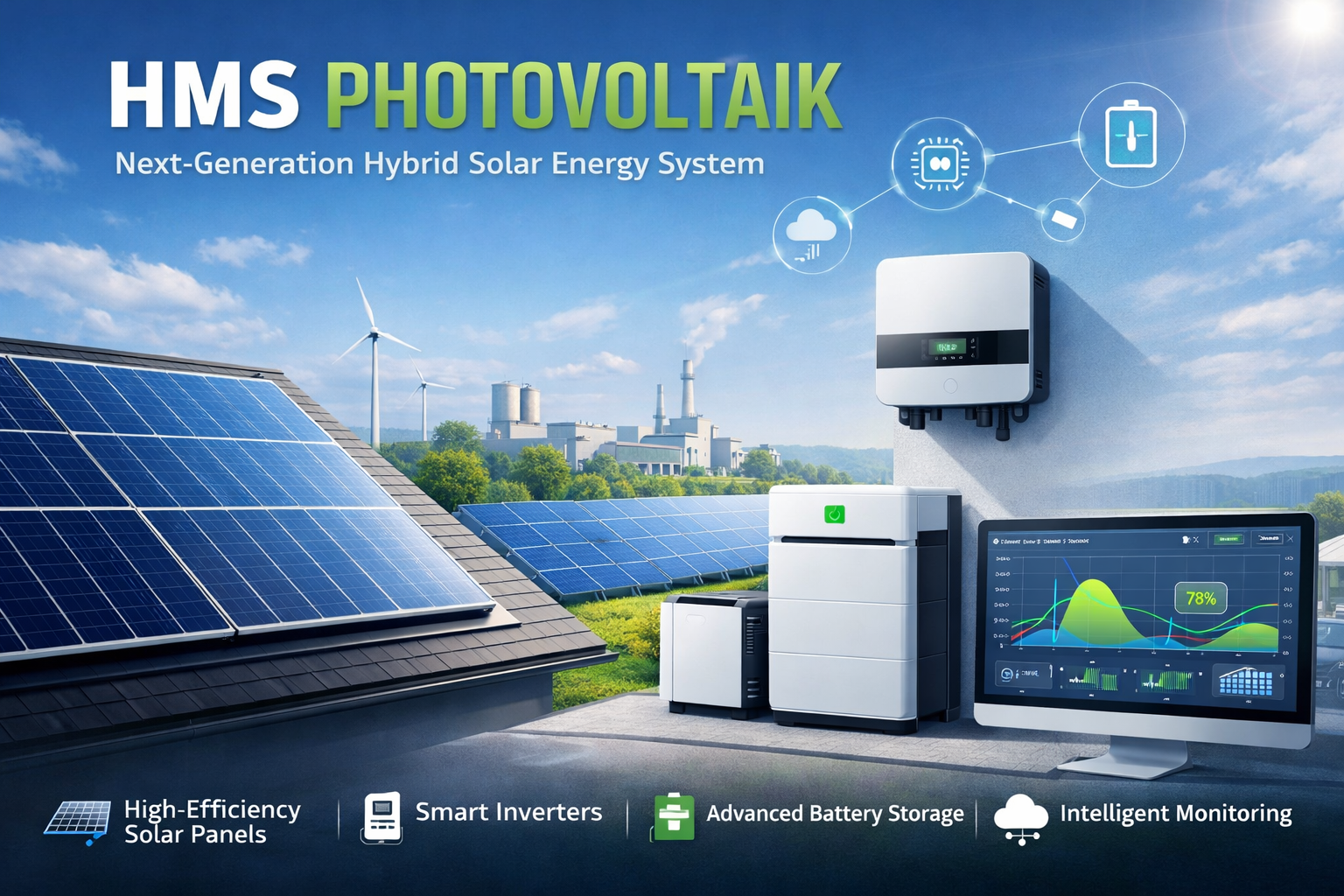
HMS Photovoltaik is a next-generation hybrid solar energy system that addresses the growing global demand for clean and sustainable power. As the world shifts toward renewable energy to combat climate change and reduce reliance on fossil fuels, Photovoltaik combines high-efficiency solar panels, smart inverters, advanced battery storage, and intelligent monitoring into a unified platform. This integration allows households, businesses, and industrial facilities to optimize energy production, enhance self-consumption, maintain reliable backup power, and achieve long-term cost savings, making it a scalable, efficient, and environmentally responsible solution for modern energy needs.
Understanding HMS Photovoltaik
Photovoltaic is a hybrid solar energy system designed to produce, store, and manage electricity efficiently. Unlike standard solar installations, it combines:
- Photovoltaic panels for electricity generation
- Smart inverters for energy conversion
- Battery storage for excess power
- AI-powered energy management for optimization
These systems are suitable for residential, commercial, and industrial applications, making solar energy accessible and practical for various users.
How It Works
Energy Capture
The system begins with solar panels absorbing sunlight and converting it into direct current (DC) electricity. The panels are designed to operate efficiently in different weather conditions, ensuring maximum energy capture throughout the day.
Energy Management
The DC electricity flows through smart inverters, which convert it into alternating current (AC) for use in homes, offices, or industrial facilities. Intelligent monitoring software manages the energy flow, optimizing consumption for efficiency.
Hybrid Operation
Excess energy is stored in batteries for later use, and surplus electricity can be fed back to the grid. In the event of a power outage, HMS Photovoltaik provides backup energy, ensuring an uninterrupted electricity supply.
Daily Operation
The system continuously monitors energy production and consumption in real-time. AI-driven algorithms analyze user behavior, weather forecasts, and grid conditions to optimize energy storage and distribution automatically.
Core Technologies
- Hybrid Energy Architecture: Combines solar generation with battery storage for efficiency and reliability.
- IoT-Based Smart Monitoring: Sensors collect data on panel output, battery levels, temperature, and system health.
- AI & Machine Learning: Predicts energy production and consumption, enabling proactive energy optimization.
- Integration Capabilities: Compatible with home, commercial, and industrial energy systems.
Technical Components of HMS Photovoltaik
Solar Panels
- High-efficiency photovoltaic cells that maximize sunlight conversion
- Options include monocrystalline, bifacial, and flexible panels
- Durable design ensures long-term performance (typically 25+ years)
- Suitable for rooftop, ground-mounted, or portable installations
Inverters
- Convert DC electricity to AC for household or commercial use
- Smart routing capabilities optimize energy flow
- Minimal energy loss ensures maximum efficiency
Energy Storage Solutions for HMS Photovoltaik
- Lithium-ion or advanced solid-state batteries store excess energy
- Provides backup power during grid outages or peak usage periods
- Modular and expandable to match growing energy needs
Monitoring & Control Systems
- Cloud-based platforms with real-time dashboards
- IoT sensors track voltage, current, temperature, and energy flow
- AI and machine learning enable predictive maintenance and optimization
- Accessible via web and mobile applications
Integration Interfaces
- Seamlessly connects with existing electrical infrastructure
- Allows smooth transitions between solar generation, battery storage, and grid electricity
- Ensures compliance with electrical safety and operational standards
Key Features of HMS Photovoltaik
- Real-Time Monitoring: Instant insights into energy production and consumption
- Adaptive Energy Management: AI automatically optimizes energy flow
- Hybrid Energy Architecture: Combines solar generation and battery storage for efficiency
- Scalable & Modular Design: Easily expandable to meet growing energy requirements
- Advanced Smart Features: Predictive analytics, load balancing, and self-consumption optimization
Benefits of Photovoltaik
Economic Benefits
- Reduced electricity bills by maximizing self-consumption
- Avoidance of peak-rate electricity charges via battery storage
- Long-term return on investment and predictable payback periods
Environmental Benefits
- Lower carbon footprint and reduced reliance on fossil fuels
- Contribution to sustainability goals and greener communities
Energy Independence & Reliability
- Backup power ensures uninterrupted electricity during grid outages
- Reduced dependence on utility providers for energy security
System Longevity
- AI-enabled predictive maintenance extends system life
- Optimized performance for decades of consistent energy production
Applications Across Sectors of HMS Photovoltaik
Residential
- Rooftop panels and home battery storage
- Smart monitoring apps for energy management
- Provides energy independence, cost savings, and integration with smart homes
Commercial
- Office buildings, retail outlets, and warehouses
- Load balancing and operational cost reduction
- Supports corporate sustainability initiatives
Industrial
- Factories, manufacturing plants, and energy-intensive facilities
- Scalable systems capable of generating large electricity volumes
- Backup energy ensures uninterrupted operations
Agriculture
- Powers irrigation systems, greenhouses, and farm machinery
- Reliable electricity for rural or off-grid areas
- Reduces operational costs for lighting, climate control, and automated systems
Electric Vehicle (EV) Charging
- Hybrid storage systems support EV charging
- Ensures reliable power even during grid disruptions
- Reduces transportation-related carbon emissions
Comparison With Traditional Solar Systems
When considering solar energy solutions, it’s essential to understand how modern systems like Photovoltaik compare to traditional solar setups. HMS Photovoltaik offers advanced features that distinguish it from conventional photovoltaic systems:
| Feature | HMS Photovoltaik | Traditional Solar Systems |
| Smart Monitoring | ✅ Yes | ❌ No |
| Battery Backup | ✅ Yes | ❌ Usually no |
| Energy Efficiency | High | Moderate |
| Self-Consumption | Optimized | Limited |
| Cost | Higher upfront | Lower upfront |
| Scalability | Easy to expand | Limited options |
Key Takeaways:
- Smart Monitoring: HMS systems provide real-time data on energy production, consumption, and storage, allowing users to make informed energy management decisions. Traditional systems generally lack this capability.
- Battery Backup: With integrated storage, HMS Photovoltaik ensures electricity supply during outages. Most traditional solar systems do not include battery backup, relying entirely on the grid.
- Efficiency and Self-Consumption: Intelligent energy management optimizes self-consumption, whereas conventional systems often feed excess energy to the grid without storage.
- Scalability: HMS systems are modular, making it simple to expand as energy needs grow. Traditional solar setups have limited upgrade options.
While traditional solar systems have lower upfront costs, Photovoltaik delivers greater long-term value through efficiency, reliability, and smart energy management.
Cost and Savings
HMS Photovoltaik systems offer cost savings and strong returns on investment for both residential and commercial users:
Residential Systems
- Investment: $5,000–$12,000
- Savings: 20–40% reduction in electricity bills
- Payback Period: 5–7 years
- Notes: Ideal for homes seeking energy independence, backup power, and reduced utility costs.
Commercial Systems of HMS Photovoltaik
- Investment: $15,000–$50,000
- Savings: 25–50% reduction in energy expenses
- Payback Period: 4–6 years
- Notes: Suitable for offices, retail stores, and warehouses with high electricity consumption and sustainability goals.
Modular/Scalable Systems
- Investment: Depends on system size and components
- Savings: Varies by energy usage and expansion
- Notes: Allows future upgrades for growing energy needs.
Financial Incentives: Tax rebates, solar incentives, and government programs can shorten the payback period and make adoption more affordable.
Challenges and Limitations
Despite its benefits, HMS Photovoltaik has challenges that users should consider:
- High Upfront Investment: Modern hybrid solar systems are costlier initially compared to basic solar panels.
- Installation Complexity: Requires skilled professionals for proper setup, integration, and safety compliance.
- Sunlight & Weather Dependency: Energy generation depends on sunlight availability; extended cloudy periods may reduce output.
- Rapid Technology Evolution: Advancements in solar panels, batteries, and AI may render hardware outdated over time, requiring careful consideration of future-proof components.
While these limitations exist, the long-term benefits, efficiency, and savings often outweigh the challenges.
Future Innovations and Trends
Photovoltaik is continuously evolving, incorporating next-generation technologies to enhance performance and adaptability:
- Blockchain & Smart Contracts: Enables peer-to-peer energy trading within communities, creating micro-grids and transparent energy sharing.
- Solid-State Battery Technology: Offers higher capacity, faster charging, and longer lifespan than traditional lithium-ion batteries.
- Advanced AI & Predictive Analytics: Improves energy forecasting, optimizing storage and consumption automatically.
- Integration with IoT Ecosystems: Connects solar systems to smart homes and commercial buildings for holistic energy management.
- Efficient & Flexible Panels: Next-gen panels are lightweight, portable, and ideal for urban or mobile installations.
These innovations make HMS Photovoltaik a future-ready platform capable of addressing evolving energy challenges.
How to Get Started
Adopting Photovoltaik involves several steps to ensure optimal performance and ROI:
- Assess Energy Consumption: Analyze current electricity usage, peak loads, and future growth.
- Conduct Site Evaluation: Evaluate roof or ground space, shading, and local climate to design an efficient system.
- Plan Finances: Consider upfront costs, incentives, and payback period. Factor in long-term savings.
- Select System Components: Choose appropriate solar panels, battery capacity, and monitoring features.
- Professional Installation & Commissioning: Certified installers ensure safe, compliant, and optimal setup.
- Continuous Monitoring & Maintenance: Use smart platforms for real-time tracking, performance optimization, and predictive maintenance.
Following these steps ensures a smooth transition to clean, reliable solar energy.
Environmental & Social Impact
HMS Photovoltaik contributes to a greener, more sustainable future:
- Reduced Greenhouse Gas Emissions: Solar energy replaces fossil fuel electricity, lowering carbon footprint.
- Air Pollution Reduction: Cleaner energy improves local air quality.
- Community Adoption: Encourages residential and commercial uptake of renewable energy.
- Educational Support: Promotes awareness of solar energy through training, workshops, and community programs.
The system’s impact extends beyond individual users, fostering environmental responsibility and global sustainability.
Conclusion
Photovoltaik is a modern, scalable, and intelligent solar energy solution that combines efficiency, sustainability, and cost-effectiveness. Unlike traditional solar systems, it provides:
- Smart monitoring for real-time insights
- Battery backup for uninterrupted power
- Optimized self-consumption for maximum efficiency
- Scalable design for growing energy needs
Its applications span residential, commercial, industrial, agricultural, and electric vehicle sectors, making it a versatile choice for diverse energy demands. By promoting clean energy adoption, HMS Photovoltaik contributes to climate change mitigation, energy independence, and sustainable development, positioning itself as a future-ready platform for renewable energy adoption.