
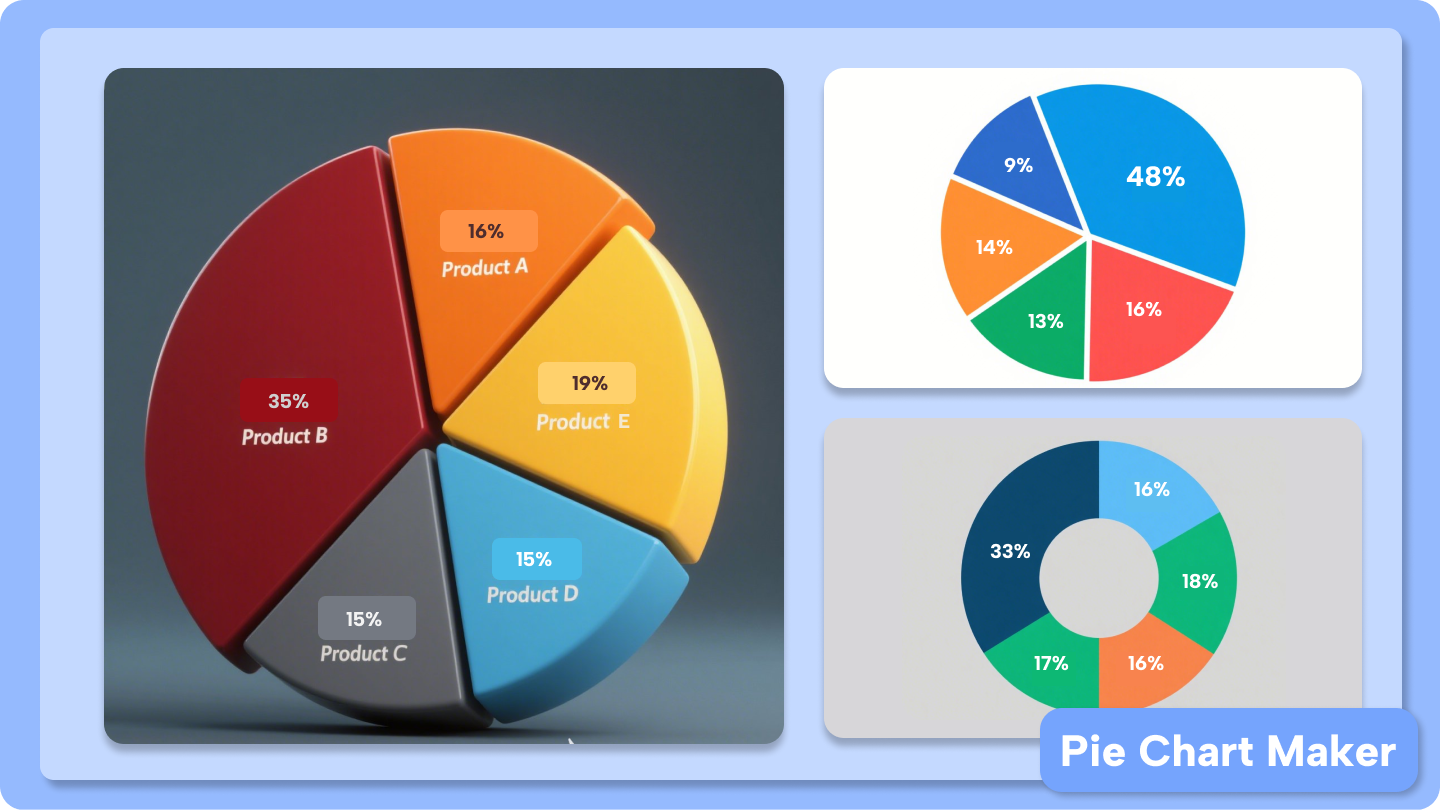
In today’s digital environment, many people rely heavily on visual tools to explain ideas. Charts, graphs, and automated generators are often used to present information quickly. However, not every message needs a visual representation. In fact, creating content without a pie chart maker can lead to deeper understanding, clearer communication, and stronger engagement with readers.
This approach focuses on words, logic, and storytelling rather than visuals, allowing ideas to stand on their own merit.
Why Content Without a Pie Chart Maker Still Matters
While pie charts are useful for showing proportions, they can sometimes oversimplify complex ideas. When writers choose to explain information using words instead of charts, they encourage readers to think critically rather than just glance at percentages.
Content written without an pie chart maker allows room for nuance. It helps explain the “why” behind the data, not just the “what.” Readers gain context, background, and reasoning, which often leads to better comprehension.
The Strength of Text-Based Explanation
Text-based content gives writers full control over how information is delivered. Instead of forcing ideas into fixed visual segments, writers can guide readers step by step through an explanation.
When writing without a pie chart maker, concepts can be explored gradually. This method works especially well for topics that involve reasoning, comparisons, or layered arguments where numbers alone are not enough.
Improved Accessibility and Inclusivity
Not all readers interpret charts the same way. Some may find visuals confusing, while others may rely on screen readers that do not translate graphics effectively. Writing content without a pie chart maker ensures that information is accessible to a broader audience.
Clear paragraphs, descriptive explanations, and logical structure make content easier to understand for everyone, regardless of their technical background or learning style.
Encouraging Deeper Engagement
Visuals often invite quick consumption. A reader looks, understands, and moves on. Written explanations, on the other hand, encourage slower and more thoughtful engagement.
By avoiding a pie chart maker, writers prompt readers to spend more time with the content. This can increase retention, improve understanding, and create a stronger connection between the reader and the message.
Flexibility in Presenting Ideas
Writing without a pie chart maker allows greater flexibility. Instead of being limited to percentages or segments, writers can compare ideas using examples, analogies, and real-life scenarios.
This flexibility makes it easier to adapt content for different audiences. A beginner-friendly explanation can be expanded for advanced readers without needing to redesign or reinterpret visuals.
Building Stronger Writing Skills
Relying less on visual tools forces writers to sharpen their communication skills. They learn how to explain data, trends, and relationships using language alone.
Over time, writing without a pie chart maker helps improve clarity, vocabulary, and logical flow. These skills are valuable across all forms of communication, from academic writing to business content and storytelling.
When Writing Is Better Than Visuals
There are many situations where written content is more effective than charts. Opinion pieces, tutorials, case studies, and reflective articles often benefit from detailed explanations rather than visual summaries.
In these cases, avoiding a pie chart maker keeps the focus on insight rather than appearance. The message becomes more personal, thoughtful, and impactful.
Conclusion: The Value of Words Over Tools
Creating content without a pie chart maker is not a limitation—it is a choice. It prioritizes clarity, depth, and human connection over quick visual interpretation. While charts have their place, strong writing remains one of the most powerful tools for sharing ideas.
By focusing on structure, explanation, and storytelling, writers can deliver meaningful content that stands on its own, proving that words alone are often more than enough.
Disclaimer
This article is for informational purposes only and reflects the author’s perspective on content creation. It does not provide professional, technical, or business advice. The effectiveness of using or avoiding visual tools like pie chart makers depends on individual goals, audience, and context. Readers should use their own judgment when applying these ideas.