
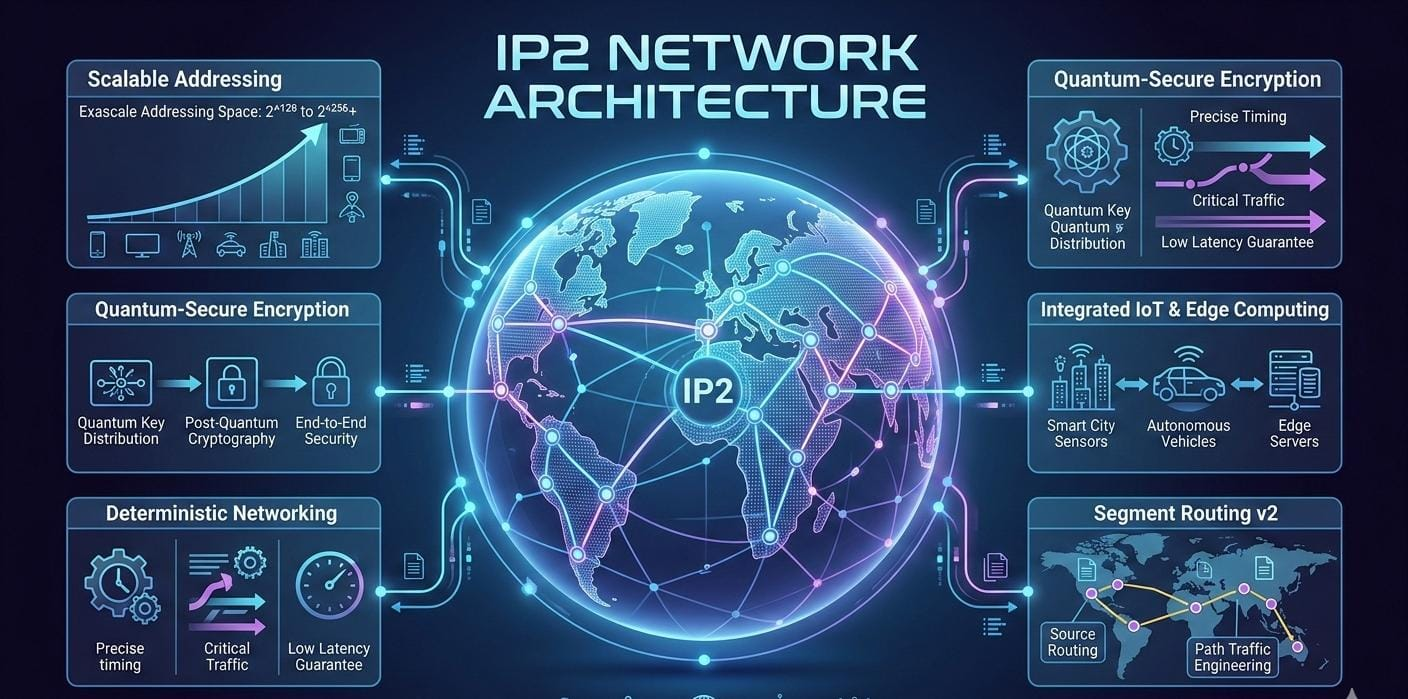
As digital transformation accelerates across industries, the demand for faster, safer, and more intelligent networking solutions continues to grow. Traditional internet infrastructure was built for a simpler era one defined by limited devices, predictable traffic patterns, and centralised control. Today’s digital environment is dramatically different. Cloud computing, artificial intelligence, remote work ecosystems, and billions of connected devices require a new networking paradigm.
The IP2 network has emerged as a conceptual framework designed to address these modern challenges. By combining decentralised architecture, intelligent routing, automated optimisation, and built-in security, IP2 networking represents a shift from passive connectivity to adaptive digital infrastructure.
What Is an IP2 Network
An IP2 network can be understood as an advanced evolution of traditional Internet Protocol networking. While conventional networks focus primarily on delivering data packets from one point to another, IP2 networking introduces intelligence and automation directly into the communication process.
Rather than acting as a simple transmission channel, it functions as an adaptive system capable of analysing traffic behaviour in real time, dynamically optimising data pathways, detecting and mitigating security threats, scaling efficiently across distributed environments, and maintaining resilience through decentralised architecture. In essence, IP2 networking transforms connectivity into a responsive digital ecosystem that continuously adjusts to changing conditions without requiring manual intervention.
Core Principles Behind IP2 Networking
Understanding the architecture of an IP2 network requires examining the principles that define its design philosophy.
Intelligent Data Routing
Traditional routing methods rely on predefined pathways or manual configuration. IP2 networking introduces automated decision-making, allowing the network to choose optimal paths based on congestion, latency, and application priority.
Decentralised Infrastructure
Instead of depending on central control points, IP2 networks distribute processing and routing across multiple nodes. This reduces vulnerability to outages and cyberattacks.
Integrated Security by Design
Security is embedded directly into network operations rather than added as a separate layer. Encryption, monitoring, and threat detection function as core components.
Self-Optimising Performance
Through continuous monitoring and predictive analytics, the network automatically adjusts resource allocation to maintain efficiency.These principles collectively redefine how data moves across digital systems.
How IP2 Network Function in Practice
An IP2 network builds upon standard packet-based communication while introducing advanced operational capabilities that make connectivity more intelligent and responsive. It continuously performs real-time traffic analysis to identify congestion points and automatically reroutes data for optimal performance. Through policy-based data management, administrators can define rules that prioritise specific types of traffic according to organisational needs.
The system also supports autonomous network healing, meaning disruptions trigger automatic rerouting or isolation of affected nodes without manual intervention. Additionally, adaptive resource allocation dynamically distributes bandwidth and processing capacity to maintain consistent performance. Together, these mechanisms transform the network from a passive data carrier into an active participant in communication management.
Key Features of IP2 Network Technology
- Dynamic Routing Optimisation Transmits data along the most efficient paths to reduce latency and packet loss.
- Quality of Service Intelligence Prioritises critical applications like real-time communication or financial transactions.
- Distributed Network Architecture Uses decentralisation to reduce dependence on single infrastructure points, enhancing resilience.
- Built-In Encryption Framework Embeds data protection directly into transmission protocols to ensure confidentiality.
- Predictive Threat Detection Analyses behavioural patterns to identify potential security risks.
- Seamless Scalability Supports network growth without extensive restructuring.
- Adaptable Infrastructure These features collectively make IP2 networks suitable for modern digital environments.
Security Capabilities of IP2 Network
Cybersecurity is a key driver behind the development of IP2 networking, as traditional networks often rely on perimeter-based security that protects entry points but leaves internal communications exposed. Unlike these conventional systems, IP2 networking embeds protection directly into data flow processes, offering multi-layer data protection where encryption secures information in transit and behavioural monitoring detects suspicious activity. Its distributed architecture reduces the attack surface by eliminating centralised vulnerabilities, while automated systems enable proactive threat response by isolating compromised nodes before damage spreads.
Additionally, identity-aware communication allows access control policies to be applied based on user identity, device type, or behavioural patterns. Despite these robust security features, experts recommend complementing IP2 networks with additional measures such as strong authentication and endpoint protection for comprehensive cybersecurity.
Performance Advantages Over Traditional Networks
One of the most compelling benefits of IP2 networking is its ability to enhance digital performance across a wide range of environments. By leveraging adaptive routing, the network minimises latency, reducing delays caused by congestion or inefficient data paths. Its decentralised architecture ensures higher reliability, allowing the system to continue operating even if individual nodes fail. Real-time optimisation also enables efficient bandwidth usage, preventing resource waste and maximising overall network efficiency.
Additionally, prioritised traffic management ensures that applications perform consistently, improving the user experience. These advantages make IP2 networking particularly valuable for environments that rely heavily on real-time data exchange, such as financial services, telemedicine, and online collaboration platforms.
Applications of IP2 Network Across Industries
The flexibility of IP2 network architecture enables it to support a wide range of digital applications across multiple industries. In enterprise infrastructure, businesses benefit from secure communication channels, scalable cloud integration, and resilient remote work environments.
Internet of Things (IoT) ecosystems rely on low-latency communication and dependable connectivity across distributed networks, making IP2 networking ideal for smart devices. Healthcare systems also gain from the network’s capabilities, as telemedicine, remote diagnostics, and digital health monitoring require secure, real-time data transmission. In financial services, high-speed and protected communication supports transaction processing and fraud prevention. Media and communication platforms, including streaming services and online collaboration tools, depend on optimised performance and minimal downtime, while smart infrastructure in urban management requires continuous, secure data exchange across connected devices.
Benefits for Businesses and Organisations
- Enhanced Operational Resilience Distributed systems minimise vulnerability to outages and cyber disruptions.
- Long-Term Cost Efficiency Automation lowers maintenance overhead and reduces infrastructure strain.
- Future-Ready Digital Infrastructure Supports emerging technologies without requiring major redesign.
- Improved Data Governance Integrated monitoring enhances visibility and control over information flow.
- Digital Transformation Advantage These benefits make IP2 networking highly attractive for organisations pursuing digital transformation.
Challenges in IP2 Network Implementation
Despite its potential advantages, implementing IP2 networking involves several practical considerations. Integration complexity is a key factor, as existing infrastructure may need gradual adaptation to accommodate the network’s advanced features. Managing intelligent, AI-driven networks also requires specialised technical expertise, making skilled personnel essential for effective operation.
Additionally, advanced analytics and automation can increase computational and resource demands, which organisations must plan for in advance. Standardisation and widespread adoption remain ongoing challenges, as the success of IP2 networks depends on industry alignment and consistent implementation practices. These factors highlight the importance of careful strategic planning when adopting advanced networking frameworks to ensure a smooth and effective transition.
Role of IP2 Network in Technology
As global connectivity continues to expand, networks are expected to handle increasing data volumes, diverse devices, and heightened security demands. IP2 networking aligns closely with these major technological trends. By integrating artificial intelligence, networks can analyse data patterns in real time, enabling more intelligent and responsive systems. The rise of edge computing allows distributed processing, reducing latency and improving the performance of real-time applications.
Autonomous systems, from smart vehicles to industrial machinery, increasingly rely on instantaneous data exchange, which IP2 networks facilitate. Furthermore, advanced digital infrastructure requires networking systems that are flexible, secure, and scalable to support emerging technologies. In this context, IP2 networking represents a broader shift toward intelligent infrastructure that actively participates in digital operations rather than simply transmitting data.
Why IP2 Network Matters Today
The digital world is no longer defined solely by connectivity; it is defined by intelligent connectivity. Data must move quickly, securely, and reliably across complex environments. Traditional networking models struggle to meet these demands at scale.
IP2 networking represents a conceptual response to these challenges by combining performance optimisation, decentralisation, and integrated security into a unified framework. While still evolving, its principles illustrate the direction in which modern networking is heading.
Conclusion
The IP2 network concept signals a transition from static communication infrastructure to adaptive digital ecosystems. By embedding intelligence, automation, and security into core network operations, it addresses many limitations of traditional connectivity models.
Although implementation requires careful planning and complementary security measures, the potential benefits are substantial. Improved performance, enhanced resilience, scalable architecture, and integrated protection make IP2 networking a compelling framework for the future of digital infrastructure.